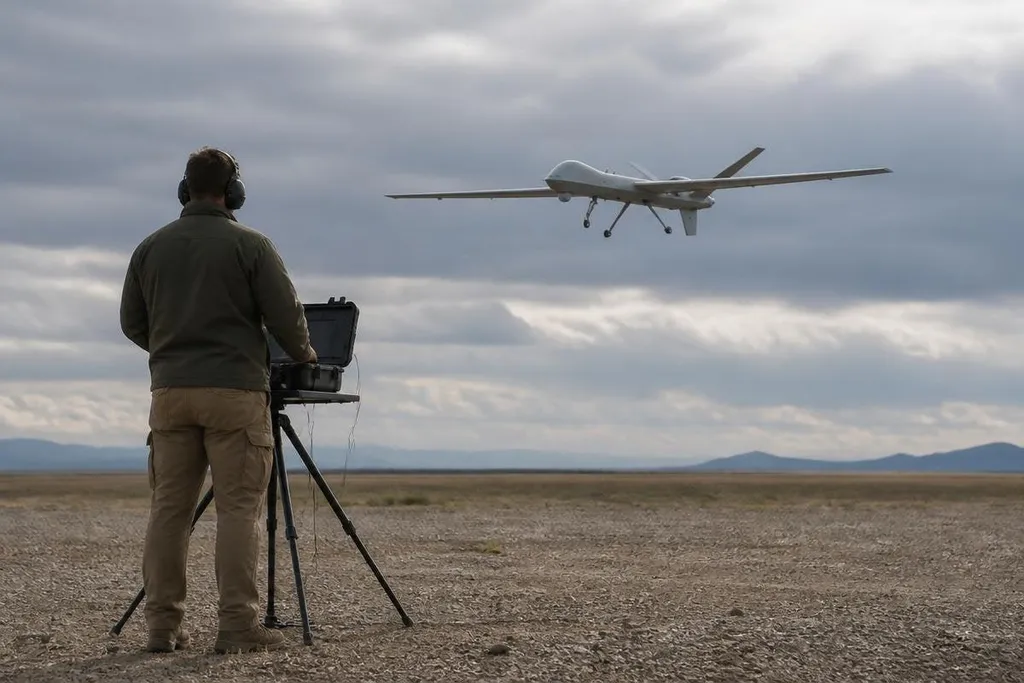
A defense drone can fly well in a test and still fail when its radio link breaks, its battery runs low, or its sensors lose the ground. The next phase of military drone work will focus on how systems operate across a full mission, with people still setting the limits.
- Larger fleets of smaller systems
- More work during poor communications
- Greater focus on repair, cost, and human control
From single aircraft to working fleets
A single large drone carries more fuel, sensors, and equipment. It also gives an opponent one valuable target.
A fleet of smaller drones can spread the task across many machines, so the loss of one unit may not end the mission.
That approach changes the buying question. Defense teams will need to judge how many drones they can deploy, replace, repair, and control at once. A lower purchase price helps only if the units can be stored, charged, updated, and sent back into service without long delays.
The fleet may also include different types of drones. One could carry a camera, another could relay radio signals, and another could carry a small payload. Each drone then has a narrow job, which can reduce the cost and software burden of every unit.
Autonomy will meet bad conditions
Autonomy means a drone can make some choices without a person guiding every movement. That may help when operators face too many machines or when a signal drops, but the system still needs clear limits.
Sensors can lose track of an object in smoke, dust, rain, or darkness. Radio links can weaken or disappear. Satellite navigation can become unreliable. A system that works in a clean test area may behave differently when the scene changes and the data becomes incomplete.
For that reason, future systems will need better ways to report uncertainty. An operator should know when the drone has a clear view, when it has lost an object, and when its software is making a low-confidence decision. A smooth video demo cannot answer those questions by itself.
Human control will remain part of the design. The difficult question is where that control sits: before launch, during target selection, during movement, or at every stage of the mission. The answer will depend on the task, the rules in force, and the risk to people nearby.
Communications and repair matter as much as flight
A drone depends on more than its airframe and motors. It needs a radio link, a control station, batteries, software, spare parts, and people who can fix faults. That makes communications and field support part of the drone system.
After losing contact, a drone can continue a safe route for scouting or delivery. A system that can return, land, or wait for a new command gives operators more choices. Those actions need testing under signal loss, not only under normal conditions.
Repair will shape fleet size too. Units that need a factory visit after a minor crash will cost more to keep in service than units built around replaceable parts. Software updates bring another concern: a fleet needs a safe way to check, install, and roll back changes.
A defense procurement team needs a dated record of a drone’s flight range, repair plan, software control, and field use. Defense drone reporting from Robot24.com can tie those claims to the maker, test site, and operator role before the next section checks what buyers should ask for.
What buyers should check next
A procurement team can use this checklist before treating a drone demonstration as proof of field value:
- Ask for results after radio or satellite navigation loss.
- Check how long a trained team needs to prepare each unit.
- Price batteries, spare motors, payloads, and control stations.
- Test the system in rain, dust, darkness, and cluttered terrain.
- Record where a person must approve an action.
- Confirm how software updates are tested and reversed.
The strongest opposing view is that larger drones will remain useful because they carry more equipment and can stay airborne longer. That is true for some missions, but it does not remove the need for smaller systems that can spread risk and work in places where a large aircraft is harder to protect.
I'd judge future defense drones by the whole mission record: launch, communication loss, task performance, recovery, repair, and operator workload. The systems that pass those checks will matter more than the ones that produce the cleanest flight video.